Thursday, January 17, 2013

Treatment with Invisalign


Invisalign® and your wedding..

Your wedding is one of biggest events of your life. How many times in your life are all of your friends and family gathered in one place, just for you? How often do you have such a large photo opportunity focused on you? Of course, you want to look your best during this event with a great smile to compliment your wedding dress (or suit). The answer: Invisalign®. You may have heard of this treatment option, and you probably have some questions.
 

What is Invisalign®?

Invisalign® is a series of removable aligners that many times are an alternative to braces. It was developed by Align Technologies, and Dr. Steckel has used this treatment option since 1999. She is also an Invisalign® Preferred Provider, meaning she is experienced and current in providing this treatment. The aligners are specifically designed to fit your teeth, and are practically unnoticeable while straightening your teeth.


How does it work?

Dr. Steckel consults with you to determine that Invisalign® will predictably work for you on the pre-wedding schedule you’ve planned. (See photos below of a recent bride’s experience.) If Invisalign® is right for you, impressions of your teeth are made to create the three-dimensional computer model Dr. Steckel uses plan your treatment. Dr. Steckel reviews your plan with you, and shows what each aligner will do, and then you start to wear your aligners.


How will I use Invisalign®?

You will be scheduled with Dr. Steckel and her OSL team typically every six to eight weeks. The average treatment plans involve about 20 or 30 aligners, and each aligner is worn for 2 weeks. Although we suggest you wear the aligners as much as possible, you can take them off for special occasions, like your weddingJ. They also can be removed for eating and drinking.  Make sure that you clean your teeth properly before reseating the aligners. For best results, the aligners should be worn for twenty-two hours each day.
 

“Here are some before and after photos before the treatment with Invisalign® and before the wedding.
She was very satisfied even though the treatment wasn’t finished by the time of her wedding.”


How effective is Invisalign®?

Invisalign® is effective in correcting gapped teeth, over bites, under bites, open bites, cross bites, and overcrowding. Note-Although Invisalign® has made breakthroughs to address more severe and complex cases, some cases may require traditional braces for treatment. If that is the case, have no fear, for today’s traditional or ceramic braces are smaller and more effective than ever before. They would be more apparent than Invisalign®, but they are still an available option. Other considerations: Some of our patients we’ve treated with Invisalign® had braces when they were younger. These patients usually report a preference for Invisalign® to straighten their teeth.


Here are some before and after photos of our Invisalign® patients, the first wanted to correct her spaced teeth and the second to correct her overbite and crowding:

Conclusion:

So, when you plan your wedding, remember that there is more than one treatment option improve your smile. Invisalign® can help you improve your smile and remain under-the-radar while you’re doing it.  Dr. Steckel’s advice- plan early and plan ahead, see your dentist for a check-up, then call us for an orthodontic consultation.


Treatable cases. (2012). Retrieved from http://www.invisalign.com/How-Invisalign-Works/Pages/Treatable-Cases.aspx

Steckel, S, (2012) Choices, Choices, Invisalign or Braces. Retrieved from Orthodontics on Silverlake blog. www.doverorthodontics.com

Steckel, S (2011) National Orthodontic Health Month. Retrieved from Orthodontics on Silverlake blog. www.doverorthodontics.com

DiMatteo, A. (2012). Invisalign: Invisible braces solution. Retrieved from http://www.yourdentistryguide.com/invisalign/


Tuesday, December 11, 2012

Sonicare® Toothbrush and Good Oral Health

Orthodontic patients at Orthodontics on Silverlake are usually in good dental health before they begin their treatment. In reviewing their medical history before treatment, I may find prescription meds that can cause dry mouth and/or eating habits that can be detrimental. Frequent meals can subject their teeth to more frequent plaque-inducing acids. So our patients get an education in oral health care, and they are asked to make a commitment to keeping their teeth clean throughout their active treatment. GOOD NEWS: This has been shown to have a lasting impact, long after the treatment is completed.(1)
 
I have found that patients using a Sonicare® toothbrush have an easier time maintaining their commitment.
 
  • My OSL team and I observe less stain on our patients' teeth, and this also was confirmed in a 2010 randomized, multi-center study of 179 adults (2).
  • Another study looked at reducing gingivitis, gingival bleeding and plaque over time and they compared a manual toothbrush to a Sonicare® toothbrush. The Sonicare® toothbrush removed up to 4 times as much plaque than the manual toothbrush, and reduced the bleeding and gingivitis by 2 times.(3)
  • The 2 minute timer in the brush is very motivating, and the mechanism and extent of plaque removal goes beyond manual scrubbing. (4)
 
We encourage patients to put a Sonicare® on their Christmas wish list this year (not kidding!). Every Sonicare® toothbrush purchased in our office in the month of December 2012 enters you into our drawing for one lucky parent or patient to receive their very own Sonicare® from all of us at OSL.
 
Good luck, Good health, and Happy Holidays! See you next month.
 
 
References:
1. Orthodontic Treatment Contributes to Good Dental Health for Adults/www.aaomembers.org/Press/Orthodontic
2. Colgan P, DeLaurenti M, et al Data on File 2010
3. Milleman K, Milleman J, Putt M et al, Data on File 2011
4. Hope CK, Wilson M. Am JDent 2002;15:7B-11B


Tuesday, November 20, 2012

Teeth Missing In Action...

....Congenitally Missing Lateral Incisors

One of several reasons I appreciate having been a general dentist for a few years and now working as a specialist with local general/restorative dentists is combining orthodontic treatment with esthetic dentistry for permanent finished results.

Typically, the youngest patient seen for an orthodontic consult is around the age of 7. At this consult a missing lateral incisor can be diagnosed at that young age. Closing the space where the tooth (if one is missing) or teeth (if both are missing) is an esthetic and viable procedure that provides longterm results that are completed in the patient's adolescence. Recent improvements in restorative dentistry including individual tooth bleaching, porcelain veneers and/or hybrid composite resin build-ups can yield results indistinguishable from natural dentitions. These improvements discussed can minimize potential problems with orthodontic space closure, when teeth are substituted into non-traditional positions. Longterm stability of the results is aided with a fixed retainer and removable back-up retainer.
 
Patient finished her orthodontic treatment at 17 years, with all of her natural teeth. No additional dental treatment needed.

 
Patient finished his orthodontic treatment at age 18 years with all of his natural teeth. No additional dental treatment needed.


Of course in treatment planning, it's important to identify alternative procedures, including discussing the cost-risk-benefit ratios of each option. Osseointegrated implants are frequently discussed to replace the missing tooth/teeth. Unfortunately the timeline for optimum longterm results adds potential problems to this treatment option. These timeline issues are realized when a patient finishes orthodontic treatment at age ~13, receives retainers, and waits at least 4 (female) and up to 7 years (male) for skeletal growth to cease. During this time wearing a retainer consistently is frequently not done. If this happens, orthodontic re-treatment is needed to realign the teeth and spaces before implants can be placed. (see photos)


Patient finished her orthodontic treatment at age 17 years, then went to a periodontist and dentist for 2 implants and 2 crowns to restore missing lateral incisors.
Top Left: Congenitally missing upper lateral incisors, Top Right: With retainer (flipper)
 Bottom: Final after implants and crowns


Patient in treatment congenitally missing upper lateral incisors. He will finish his orthodontic treatment at age 17 years. Retainer will have denture teeth attached. Implants/crowns will be done in another year to replace missing lateral incisors.


Teamwork and planning orthodontic with restorative dentistry can successfully treat patients with missing lateral incisors so the results look like an intact dentition. See you next month!

References
1. Tuverson DL. Orthodontic treatment using canines in place of missing lateral incisors. Am J Orthod. 1970;58:109-127
2. Zachrisson BU. Remodeling teeth by grinding. Am J Orthod. 1975;68:545-553
3. Rosa M., Zachrisson BU. The space closure alternative for missing maxillary incisors:an update. J Clin Orthod 2010;44:540-549
4. Thilander B, et al. Orthodontic aspects of the use of oral implants in adolescents: a 10 year follow-up study. Eur J Orthod. 2001; 23:715-731.

Monday, October 15, 2012

National Orthodontic Health Month 2012

This is a favorite month for us at OSL - we are decorated with a scary hallway and lots of candy. Yes it's true, candy in an orthodontic office! All the candy is, however, braces friendly!


We reach out to tell our patients, future patients, our community and our dental colleagues about the benefits of orthodontic treatment.

Halloween is a great time to bring attention to remind our patients about the dangers of mixing sticky sweets with their orthodontic treatment.

We congratulate all of our patients who have gone the distance...some of our recent success stories are shown below (before and after smiles):


Until next month - Thank you!


Monday, September 17, 2012

Back to School!


The start of September means the start of school for most kids, even those going to college. Our recommendations this month apply to working adults with braces as well. Keeping your braces clean while in school and at work poses some challenges. Some of the risks associated with not keeping your teeth clean are:

·         An infection of the gums caused by buildup of plaque between and on the teeth.

·         Staining: Decalcification is a white stain that cannot be removed once it has occurred. This can leave the patient with the “window effect” once the braces are removed. The staining occurs around the brackets, so once your braces are removed you will have a lifetime stain that shows where the brackets once were.
Below are some examples of what you want to avoid:

 Example of decalcification (a)
 
        Example of Gingivitis (a)
 
Can you prevent this? Yes you can:
·         Make sure to brush after every meal, including snacks. Brush "2 teeth at a time, for 2 minutes", as we reviewed at the start of your treatment.
·         Flossing plays a very important role in keeping your gums healthy; make sure to floss between every tooth and bracket after every meal, even snacks.
·         Avoid foods and drinks with a lot of sugar; if you do enjoy a sweet snack make sure to rinse out after, even if it is just with water. Don’t forget, nothing hard or sticky! 
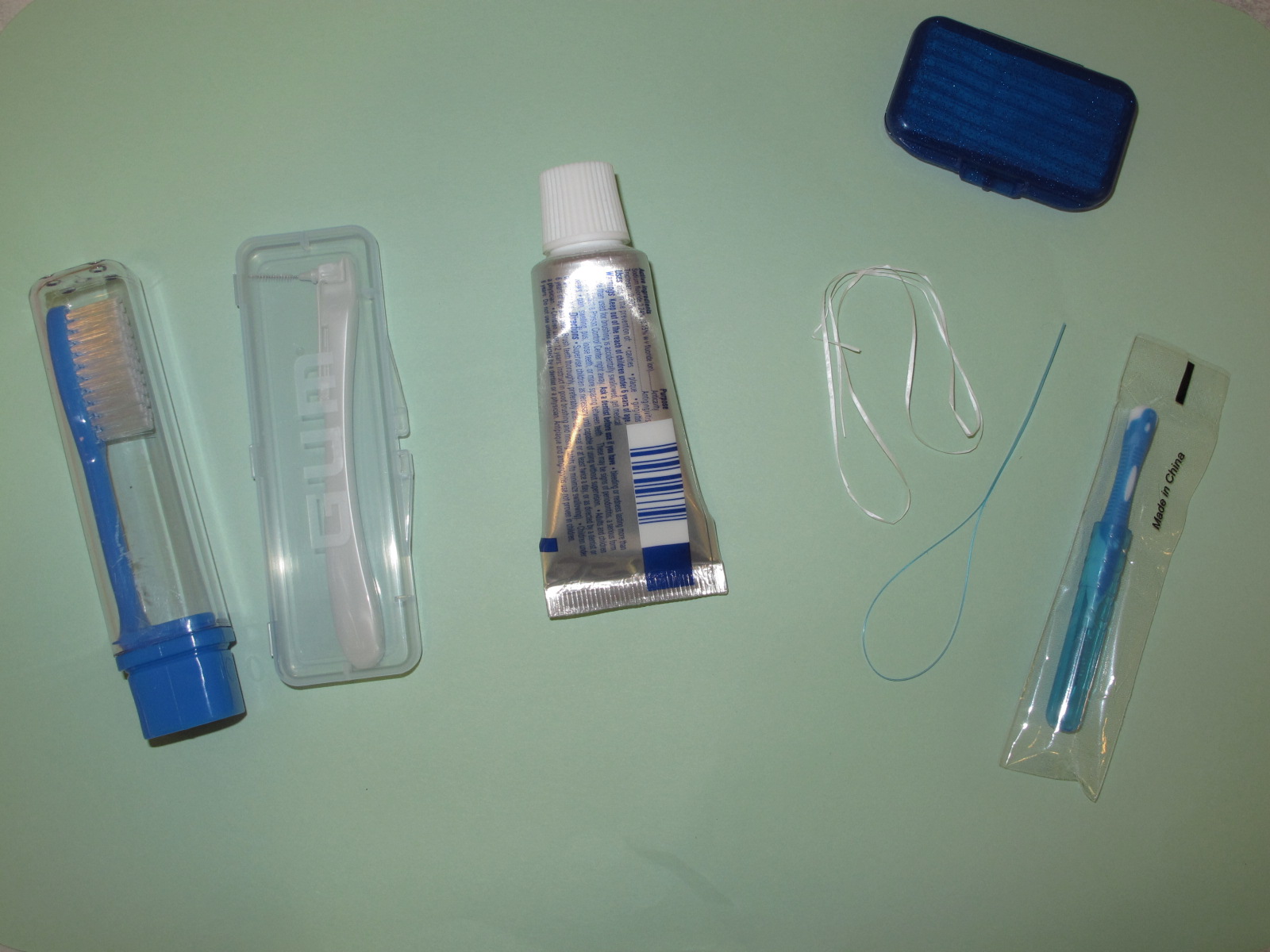
·         Make sure to bring all of your cleaning supplies with you to school, if you would like a second set of tools just ask your orthodontist. The school nurse may also have supplies for cleaning or wax for irritations, be sure to ask if you are in need of any of these supplies.
Below is a photo of orthodontic school supplies you should have with you:
Travel toothbrush, Interproximal brush, toothpaste, floss, floss threaders, and wax
 
Keep your teeth clean and they can look like this!
Looking Good!!

 
(a) Keeping your Teeth Clean: A 'Must' During Orthodontic Treatment. AAO pamphlet, 2010. Print.


Monday, August 27, 2012

Honorary Mayor of Central Delaware

Steve Artz : Honorary Mayor of Central Delaware!


In April of 2012 our very own Steve Artz was nominated as the Honorary Mayor of Central Delaware. He has been a part of such events as ribbon cuttings for: boy scout troops, Computers Fixed Today, and Corner Apothecary. He hosted the 2nd Annual Dover Return Day and the 2nd Annual Super Slide Day at Orthodontics on Silver Lake this year. Other great events that Steve has participated include many parades such as the 125th anniversary of Clayton, DE at the  Clayton Railroad Festival and the Smyrna Parade.

Recently the staff members of Orthodontics on Silver Lake have stepped in as Acting Honorary Mayors for ribbon cuttings at Tea for Two, Frankfurt Bakery, Mary's Wake Up and Reminder Service, Splash!, and for our very own new eco-friendly parking space for staff at Orthodontics on Silver Lake. Below you will see pictures of our staff members participating in these events.

Ryan at The Grand Opening of Tea for Two
 
Dr. Steckel as Acting Honorary Mayor
at the ribbon cutting for the eco-friendly parking
space at Orthodontics on Silver Lake
 
 Amber at the Grand Opening of Mary's
Wake Up and Reminder Service


Rhonda at the ribbon cutting for Splash! design company
 
Thank you for your support that put Steve Artz in the seat of Honorary Mayor of Central Delaware!

Monday, July 23, 2012

Musical Instruments and Orthodontics

Does making sweet music cause changes to your bite?

A popular question heard by my staff and me when our musical patients begin their orthodontic treatment:

Question: What can I expect now that I have braces? Will it feel weird, or hurt? For how long?

Answer: We have seen many patients over the years adjust their embouchure in a week or two. Some use the reusable protective covers we have available. As the treatment progresses, they tell us it feels normal again.
 
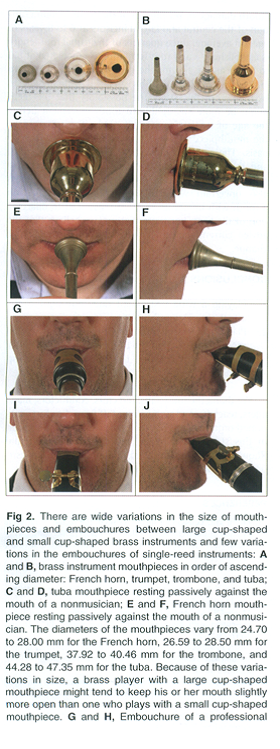
A recent article* in the AJO-DO looked at a long held theory that playing a wind instrument can effect the position of your teeth. Well does it? An orthodontist and bassoonist - Dr. Strayer - and others, have proposed this theory. It certainly seems plausible, considering the forces distributed on the dentition when playing a trumpet, a clarinet, an oboe, and a flute, which all direct horizontal and vertical forces on the teeth.

Proffit's equilibrium theory of tooth movement was put to the test. The theory states that tooth movement requires a force application that exceeds minimum threshold to effect tooth movement. The effects of thumbsucking are well-documented in the literature.
 
The authors studied 4 groups of professional musicians, all of whom play or practice on average at least 3 hours per day. One group, who did not play wind instruments, was the control. Study casts were taken of their teeth. The results showed that teeth positions are not altered significantly when playing wind instruments, except when the musician plays a large cup-shaped mouthpiece like a trombone or tuba. These musicians are at a small risk of developing a lingual cross-bite. So as the risk of significant changes to a musician's teeth alignment is very low, we encourage you to continue to practice those wind instruments!


On a side note - Since they focused the study on wind instruments, there was no mention of violinists and the risk of developing posterior cross-bites in this study, or in the references. A friend of mine from dental school who played the violin was convinced that musical activity contributed to his posterior cross-bite.
 
Until next month-thanks for your time!
 
*Reference: Grammatopoulos, White, and Dhopatkar. Effects of playing a wind instrument on the occlusion. Am J Orthod 2012; 138-145.